
Those historical shifts continue today, with technology driving many of the latest developments in accounting, accountancy just as digital tools grow in importance throughout society. From maintaining balance sheets to investigating business records to analyzing financial data, accountants play a crucial role in business operations. Although historians haven’t uncovered a record of accounting practices during this time, they point to the first exchange of goods or services as the likely start of some form of record keeping. This period lasted until 1494, with the publication of the first book to describe double-entry accounting, a system using debit and credit entries. Since the dawn of civilization, accounting has played a significant part in many facets of history, including economics and business. Accountants invented writing, money, banking, and double-entry accounting, contributing to the growth of cities, trade, wealth, and numbers.
- It allowed for the mass production of texts, making them more accessible to a wider audience.
- The first known renditions of the double ledger system were both traced to the 11th century.
- This method includes the use of journals and ledgers, with accounts for assets, liabilities, income, and expenses.
- This article will highlight some of the most important events and accomplishments of Luca Pacioli’s life and career.
- Since then, new technologies have been adopted, such as computerized accounting systems, which have made it easier to record and analyze data.
- Therefore, changes in accounting practices are viewed as indications of functional progress and system enhancements.
Book an exam
- However, no such defense can be presented concerning the inclusion of Piero della Francesca’s material in Pacioli’s Summa.
- The demand for CPAs skyrocketed as the U.S. government found itself in need of money to fight a war and began charging income tax in 1913.
- Bookkeepers have used several tools since the first records were kept in America.
- They issued a new globally-accepted uniform accounting standards called International Financial Reporting Standards (IFRS).
- Double-entry accounting is defined as any bookkeeping system that involves a debit and/or credit entry for transactions.
- Philosopher and economist Chanakya wrote “Arthashastra” in India during the Mauryan Empire around the second century B.C.
- He believed that honesty, integrity, and transparency were fundamental to the practice of bookkeeping.
Moreover, his teachings on ethics and social responsibility continue to guide modern professionals in their decision-making processes. Accountants were already essential for attracting investors, and they quickly became essential for maintaining investor confidence. The American Association of Public Accountants (AAPA) was established in 1887, and the accounting profession was formally recognized in 1896 with the establishment of the Suspense Account professional title of certified public accountant (CPA).
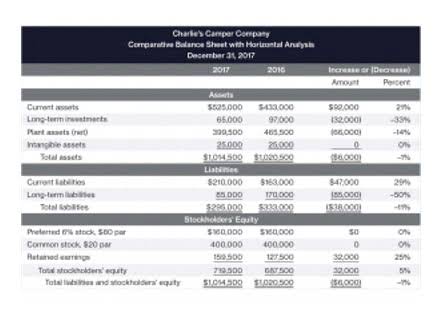
The Benefits of Accounting: Unlocking Business Success

Pacioli was particularly interested in the works of the ancient Greek mathematician Euclid, whose book Elements laid the foundations for the study of geometry. The demand for CPAs skyrocketed as the U.S. government found itself in need of money to fight a war and QuickBooks began charging income tax in 1913. Bookkeepers have used several tools since the first records were kept in America. William Seward Burroughs’ adding machine was created in 1887 and perfected for commercial sale in the 1890s.

Read more about the Bachelor of Accounting Finance and the Difference Between Fraction and Rational Number.
Luca Pacioli, an Italian mathematician and Franciscan friar, is widely regarded as the “father of accounting,” as he wrote the first comprehensive treatise on double-entry bookkeeping in 1494. Other important figures in the field include Charles Waldo Haskins, who wrote the first textbook on accounting in the United States, and Lucretia Bradstreet, who was the first woman to become a certified public accountant. For example, in the 1960s, the Generally Accepted Accounting Principles (GAAP) were introduced to provide consistent guidelines for financial reporting. Since then, new technologies have been adopted, such as computerized accounting systems, which have made it easier to record and analyze data. Another important milestone in the history of accounting is the development of double-entry bookkeeping.
- To illustrate double-entry accounting, imagine a business sending an invoice to one of its clients.
- The Tang’s money certificates, colloquially called “flying cash” because of its tendency to blow away, demanded much more extensive accounting for transactions.
- With the introduction of complex manufacturing processes, more sophisticated accounting methods were demanded by business owners and investors.
- The double-entry bookkeeping is a method of recording financial transactions using debit and credit entries.
- We have also chosen to include a few titles to represent the accountants that go unnamed but contribute to the history and development of the profession and practice of accounting.
- His book was one of the first published using the historical Gutenberg press, and the included treatise was the first known published work on the topic of double-entry bookkeeping.
What Is the Accounting Cycle?
The goal of this guide was not to be exhaustive while still being as comprehensive as possible. This guide can be used to trace changes in practices and standards by looking at many of the titles included, but for those interested in more modern practices and standards, please see a related guide on accounting and auditing. It focuses on the practices and history of accounting in the United States through the middle of the 20th century. However, some materials, particularly very early works, were chosen because of their impact on accounting in the world as well as to illustrate how practices in the United States developed. Some titles were chosen for their historical overview, while others were chosen to provide a window into a particular period of time. While there was an effort to include materials over a large span of time, it was not possible to include everything.